
Trairi Wind Complex issues its first carbon credits
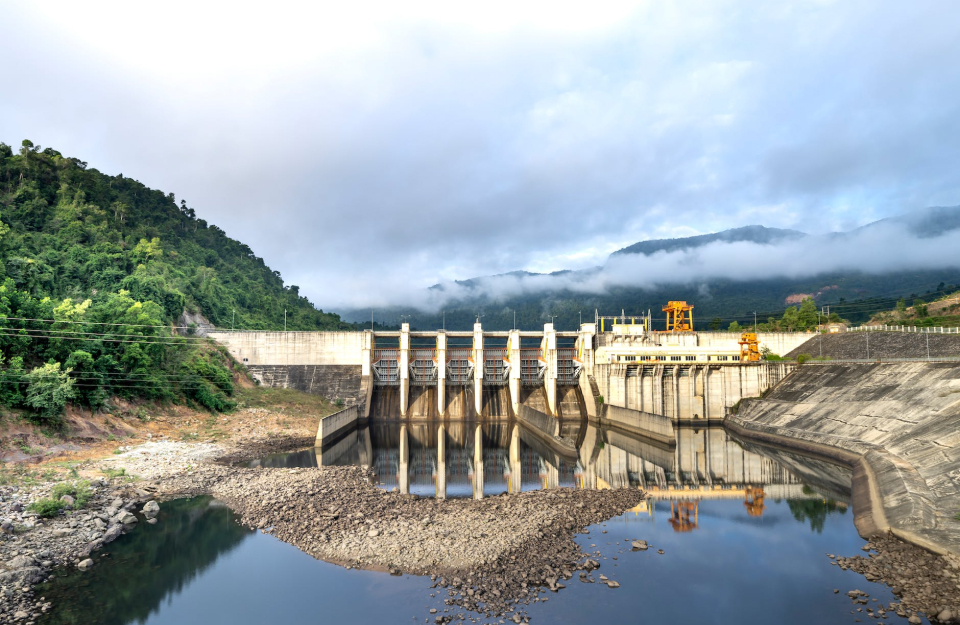
Situated in the state of Ceará and operated by ENGIE, Trairi successfully concluded its first carbon credits issue involving four of its wind farms installed in the municipality – an achievement representing one more milestone in the strategy for accelerating ENGIE’s energy transition.
The Trairi Wind Complex comprises 86 wind turbines with total installed energy of 212.6 MW – equivalent to the volume needed to supply energy to a population of 174 thousand. Over a period of seven years (2013 to 2020), 1,238,487 carbon credits have been issued each one corresponding to a ton of carbon dioxide gas (CO2) not emitted into the environment.
To give an idea of volume, the credits are enough to compensate for one year of CO2 emissions from 23 thousand vehicles traveling 30 kilometers every day with an autonomy of 10 kilometers per liter. Another way of estimating the magnitude of the amounts involved is reflected in the energy consumption of a state in the federation. For example, Trairi’s carbon credits would be enough to compensate the emissions equivalent to the annual consumption of energy in the state of Ceará over a period of 5 years.
In all, four wind farms in the Trairi Wind Complex were responsible for generating the carbon credits. The first was Guajiru, with 378,020 tons of carbon dioxide equivalent, represented by the tCO2e acronym. The second was Fleixeiras with 321,131 tCO2e, followed by Mundaú with 273,653 tCO2e, and finally Trairi with 310,683 tCO2e.
“Trairi’s carbon credit issues not only contribute to mitigating climate change but also drive the sustainability agenda and create sustainable business opportunities, supporting the decarbonization journey of innumerous clients”, comments Gabriel Mann, ENGIE Brasil Energia’s Chief Energy Commercialization Officer.
The carbon credit issuance process was approved by the United Nations Framework on Climate Change (UNFCCC) with all wind farm verification and monitoring reports prepared by Consultoria Ecofinance, and audited by the company, ESPL, which certified the entire registration process within the scope of the Clean Development Mechanism (CDM).
For registration under the CDM, the carbon credit project must be in strict accordance with all the rules and procedures of this mechanism as well as the Kyoto Protocol and the UNFCCC. The number of carbon credits to be generated by each project adheres to specific methodologies for calculation and monitoring approved internationally by the United Nations Organization (UNO).
How will commercialization be conducted
The carbon credit can only be commercialized after generation, that is after decarbonization has been verified. ENGIE’s sales strategy has been to prioritize the direct attendance of the customer in support of the latter’s decarbonization journey through delivery of the voluntary cancellation certificates issued by the UNO (UNFCCC).
“The issuance of Trairi carbon credits will allow emissions reduction certificates with great added value to be offered to clients since the Trairi Wind Complex has also been a medium for providing innumerous socio-environmental benefits for the region from the outset of the Complex’s implementation phase and including jobs and income creation, upgrading of skills together with training of the local population, research and education in the area of biodiversity, treatment of waste, among others”, declares Luciana Nabarrete, Chief People, Processes and Sustainability Officer of ENGIE Brasil Energia.
In addition to contributing to the supply of renewable energy and reducing CO2 emissions into the atmosphere, the Trairi Wind Complex is also an important vector for the promotion of the Sustainable Development Goals (SDGs), supporting territorial development activities through socio-environmental initiatives, above all in the areas of healthcare and education for the communities. Since the Complex’s implementation, ENGIE has invested more than R$ 10 million in socio-environmental projects, benefiting 50 thousand people directly and indirectly. Particularly outstanding is the Trairi Cultural Center, under construction in the region. The Center is designed to provide the municipality with a physical space where cultural and artistic manifestations may be expressed, valorizing the cultural heritage of the area, and including the first theater auditorium in the municipality. In this way, Trairi will have at its disposal a venue for enriching the cultural baggage of its citizens while, conversely, being a vehicle for disseminating local culture to those visiting the city.
What are carbon credits?
Carbon credits are generated from projects which reduce or remove greenhouse gas emissions such as carbon dioxide (CO2), from the atmosphere. In the case of renewable energy sources, such as solar or wind, carbon credits arise from the reduction in CO2 emissions which would occur if energy was to be generated from conventional energy resources such as through the burning of fossil fuels.
Through the intermediation of this system, companies that succeed in reducing their emissions below a given limit enjoy the right to issue carbon credits equivalent to the quantity of avoided pollutants. Such credits can be traded in the international market, thereby allowing other organizations to compensate their own emissions by acquiring these credits.
Sobre a ENGIE
A ENGIE é referência mundial em energia de baixo carbono e serviços. Com seus 96.000 colaboradores, clientes, parceiros e stakeholders, o Grupo está comprometido em acelerar a transição para um mundo neutro em carbono, através do consumo reduzido de energia e soluções mais sustentáveis. Inspirada em seu propósito, a ENGIE concilia performance com um impacto positivo sobre as pessoas e o planeta se apoiando em suas atividades chave (gás, energia renovável e serviços) para oferecer soluções competitivas aos seus clientes. Faturamento em 2022: 93,9 bilhões de Euros.
No Brasil, a ENGIE, empresa líder em energia renovável do país, atua em geração, comercialização e transmissão de energia elétrica, transporte de gás e soluções energéticas. Com capacidade instalada própria de cerca de 10 GW em 77 usinas, o que representa cerca de 6% da capacidade nacional, a empresa possui 100% de sua capacidade instalada proveniente de fontes renováveis e com baixas emissões de Gases de Efeito Estufa (GEE), como usinas hidrelétricas, eólicas, solares e a biomassa.
A ENGIE é também a detentora da mais extensa malha de transporte de gás natural do país, com 4.500 km, que atravessam 10 estados e 191 municípios, graças à aquisição da Transportadora Associada de Gás – TAG, concluída em 2020.Além disso, a ENGIE possui um portfólio completo em soluções integradas responsáveis por reduzir custos, emissões e melhorar infraestruturas para empresas, como ar comprimido, autoprodução solar local, biogás e biomassa, consultoria e gestão de energia, HVAC e subestações. Nas cidades, atuamos como parceira para tornar os espaços urbanos mais eficientes e sustentáveis, com soluções de iluminação pública, mobilidade elétrica e de district cooling.
Contando com 2.400 colaboradores, a ENGIE teve no país em 2022 um faturamento de R$ 12,8 bilhões.
A ENGIE está presente na B3 por meio de sua empresa de geração e comercialização de energia cujo ticker é o EGIE3. Na B3, a ENGIE integra o Novo Mercado, além de ser uma das únicas companhias listadas no Índice de Sustentabilidade Empresarial desde o início do ISE, em 2005. Em 2021, a B3 incluiu os papeis da ENGIE no Índice Carbono Eficiente (ICO2), composto pelas ações das empresas participantes do IBrX 100 que possuem maior transparência em relação ao reporte das emissões dos GEE e de como estão se preparando para uma economia de baixo carbono.
O Grupo é negociado nas bolsas de Paris e Bruxelas (ENGI), sendo representado nos principais índices financeiros (CAC 40, Euronext 100, FTSE Euro 100, MSCI Europe) e índices não financeiros (DJSI World, Euronext Vigeo Eiris – Europe 120/France 20, MSCI EMU ESG screened, MSCI EUROPE ESG Universal Select, Stoxx Europe 600 ESG-X).