Pampa Sul Thermoelectric Power Plant begins commercial operations
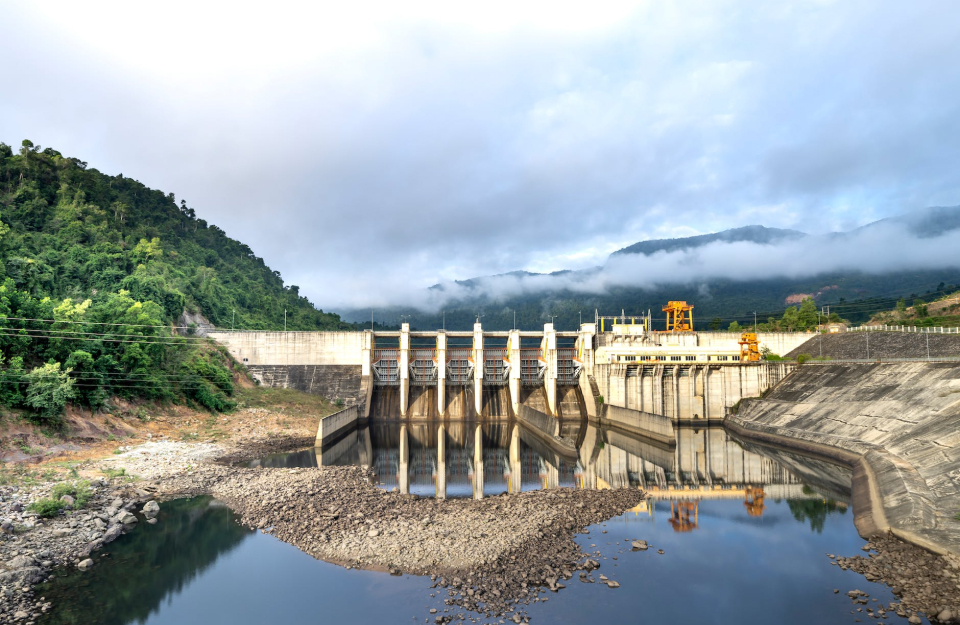
On June 28, the Pampa Sul Hydroelectric Power Plant, built by ENGIE at an investment of more than R$ 2 billion, received National Electric Energy Agency (Aneel) authorization to begin generation on a commercial scale. The feasibility of the project was assured following the A-5 auction of November 2014 – prior to the ENGIE Group announcing its planned global strategy for relinquishing all coal-fired generation activities – and construction work began in June 2015 upon receipt of the Installation License from the Brazilian Institute of the Environment and Renewable Natural Resources (Ibama).
Coal-fired and with an installed capacity of 345 MW, the plant is the largest to be built in the South of Brazil in recent years. Its construction was the responsibility of SDEPCI, a Chinese company with vast experience in work involving state of the art technology for the thermal generation segment. “We are delivering an advanced technology plant which will be of great assistance in the stability of the National Interconnected System’s operations”, declares ENGIE Brasil Energia’s Chief Executive Officer, Eduardo Sattamini. Among the technological advantages of Pampa Sul TPP, the executive points to a series of equipment designed to improve plant operations and reduce emissions into the atmosphere. “We have overcome many difficulties such as the delay in the construction of the Candiota II Substation, at the same time, demonstrating major executional capability”, the executive added.
As well as collaborating with the domestic electric sector, Pampa Sul has also brought growth to the economy of the state of Rio Grande do Sul as a whole. “The thermal power plant is a landmark event for the region, because since construction work began, it has brought development to the south of the state through investments, employment and greater opportunities for the local population. With its unveiling, the plant will provide direct jobs for 100 while a further 100 will be exclusively dedicated to its operations” ENGIE Brasil Energia’s Chief Generation Officer, José Laydner points out.
During the four years UTE Pampa Sul was under construction, a series of socio-environmental programs were introduced for fostering initiatives involving the avoidance, mitigation and offsetting of environmental damage as well as optimizing social investments in the surrounding region. Activities included the focus on physical, biotic and socio-environmental aspects, the results of which were analyzed in the report which subsequently resulted in the issue of the Plant’s Operating License issued by Ibama.
Among other actions, the Candiota and Hulha Negra communities for example have benefited from the preparation of Master Plans for Urban and Environmental Development which will help towards the structured development of the cities. Initiatives were also adopted to help ameliorate the traditional problems of municipal water supply. A new Water Treatment Plant was built in Candiota through an agreement between the City Government and Pampa Sul TPP at an investment of approximately R$ 2 million. This installation should meet the demand for water supplies for at least a further 20 years.
Again, besides the new Water Treatment Plant in Hulha Negra, the reservoir built to supply the Plant will also permit the withdrawal of water for the city itself, a new water main linking the city pending Hulha Negra City Government licensing. “During construction work at the Plant, our focus has been equally on actions in Pampa Sul’s sphere of influence in the region and focusing on the principal needs of the communities by assisting in promoting improvements directly impacting people’s quality of life”, ENGIE Brasil Energia’s CEO remarks.
The entry of the plant into operations is one more step towards its divestment by the Company. In line with its global strategy, in 2015, ENGIE announced its exit from all coal-fired assets. In Brazil, ENGIE closed its Charqueadas Thermoelectric Plant, while the processes for selling the Jorge Lacerda Thermoelectric Complex and Pampa Sul are ongoing.
Sobre a ENGIE
A ENGIE é referência mundial em energia de baixo carbono e serviços. Com seus 96.000 colaboradores, clientes, parceiros e stakeholders, o Grupo está comprometido em acelerar a transição para um mundo neutro em carbono, através do consumo reduzido de energia e soluções mais sustentáveis. Inspirada em seu propósito, a ENGIE concilia performance com um impacto positivo sobre as pessoas e o planeta se apoiando em suas atividades chave (gás, energia renovável e serviços) para oferecer soluções competitivas aos seus clientes. Faturamento em 2022: 93,9 bilhões de Euros.
No Brasil, a ENGIE, empresa líder em energia renovável do país, atua em geração, comercialização e transmissão de energia elétrica, transporte de gás e soluções energéticas. Com capacidade instalada própria de cerca de 10 GW em 77 usinas, o que representa cerca de 6% da capacidade nacional, a empresa possui 100% de sua capacidade instalada proveniente de fontes renováveis e com baixas emissões de Gases de Efeito Estufa (GEE), como usinas hidrelétricas, eólicas, solares e a biomassa.
A ENGIE é também a detentora da mais extensa malha de transporte de gás natural do país, com 4.500 km, que atravessam 10 estados e 191 municípios, graças à aquisição da Transportadora Associada de Gás – TAG, concluída em 2020.Além disso, a ENGIE possui um portfólio completo em soluções integradas responsáveis por reduzir custos, emissões e melhorar infraestruturas para empresas, como ar comprimido, autoprodução solar local, biogás e biomassa, consultoria e gestão de energia, HVAC e subestações. Nas cidades, atuamos como parceira para tornar os espaços urbanos mais eficientes e sustentáveis, com soluções de iluminação pública, mobilidade elétrica e de district cooling.
Contando com 2.400 colaboradores, a ENGIE teve no país em 2022 um faturamento de R$ 12,8 bilhões.
A ENGIE está presente na B3 por meio de sua empresa de geração e comercialização de energia cujo ticker é o EGIE3. Na B3, a ENGIE integra o Novo Mercado, além de ser uma das únicas companhias listadas no Índice de Sustentabilidade Empresarial desde o início do ISE, em 2005. Em 2021, a B3 incluiu os papeis da ENGIE no Índice Carbono Eficiente (ICO2), composto pelas ações das empresas participantes do IBrX 100 que possuem maior transparência em relação ao reporte das emissões dos GEE e de como estão se preparando para uma economia de baixo carbono.
O Grupo é negociado nas bolsas de Paris e Bruxelas (ENGI), sendo representado nos principais índices financeiros (CAC 40, Euronext 100, FTSE Euro 100, MSCI Europe) e índices não financeiros (DJSI World, Euronext Vigeo Eiris – Europe 120/France 20, MSCI EMU ESG screened, MSCI EUROPE ESG Universal Select, Stoxx Europe 600 ESG-X).