Jirau awarded the world’s main sustainability certification for hydro power plants
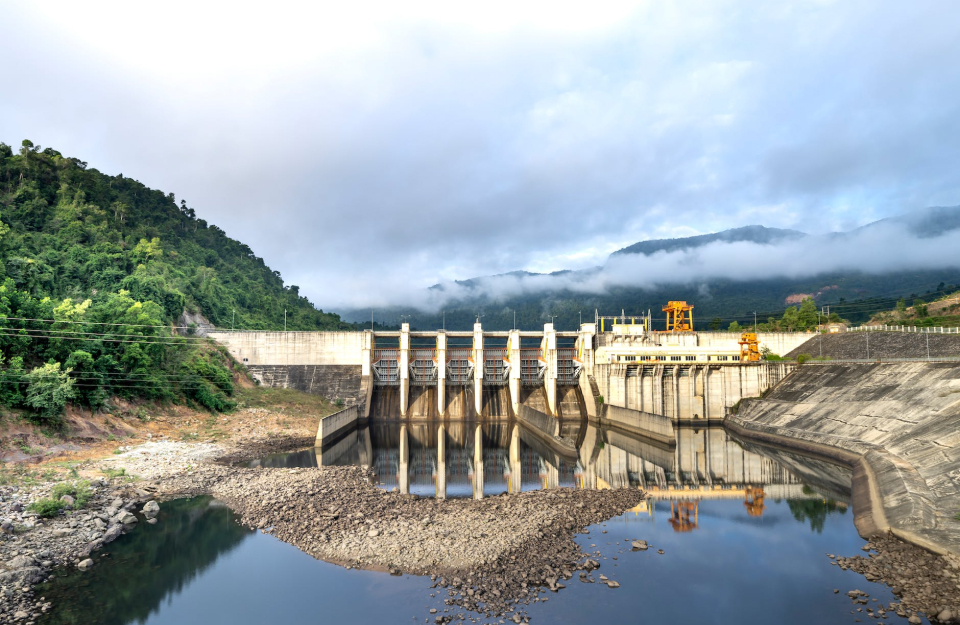
The Jirau Hydroelectric Power Plant, the fourth largest electric energy generator in Brazil, was awarded the world’s highest level of certification according to the Hydroelectric Sustainability Standard, given by the Hydropower Sustainability Council. Jirau is the first hydro plant in Brazil to earn the certification, created in 2021, after a strict evaluation conducted by a team of certified examiners who visited the plan. Jirau is the second hydro plant worldwide to be recognized at this certification level.
“We are very happy and honored to have earned this unprecedented certification in Brazil. We dedicated ourselves from the outset to being sustainable and the ability to overcome is what best describes my recollections from the construction period. This year, we celebrate ten years in operation and the certification comes as an important recognition of our hard work,” says Maurício Bähr, CEO of ENGIE Brasil and Chairman of the Board of Directors of Jirau Energia, whose shareholders include ENGIE (40%), Eletrobras Eletrosul (20%), Eletrobras Chesf (20%) and Mitsui (20%).
Jirau’s commitment to sustainability became clear from the initial design, when the plant underwent an evaluation in 2012 based on the Hydropower Sustainability Assessment Protocol (HSAP), which is also part of the Hydropower Sustainability Council. Construction of the plant was based on the optimized engineering model, which, aside from using the latest technical criteria, also took care for the environment into account. Located 120 km from Porto Velho (state of Rondônia, Brazil), the plant converts the Madeira River’s potential into renewable energy by means of 50 generator units that add up to 3,750 MW in installed capacity, placing first in the operational uptime ranking according to the National System Operator (ONS).
“Our efforts are not limited to environmental matters. We also maintain programs focusing on developing and building the skills of the regional population and specific groups, such as fisherfolk. This commitment can be seen in Jirau’s evaluation results,” noted Edson Silva, CEO of Jirau Energia. “Jirau is proof that infrastructure can be responsibly developed in the Amazon region.”
After the certification process and the visit to the Jirau plant, a 60-day public consultation period began during which stakeholders were able to review and comment on the assessment’s conclusions. The project’s performance exceeded best practices, with scores above 60% in every advanced item of each of the 12 Environmental, Social and Governance (ESG) topics listed in the Hydropower Sustainability Standard.
“Having conducted the Jirau project’s startup evaluation using HSAP during construction, it is very gratifying to go back after a decade in operation and bear witness to the significant progress and consolidation of environmental and social initiatives, together with the project’s positive impacts,” pointed out Joerg Hartmann, head of the 2023 assessment and also part of the evaluation team in 2012. “Having previously collaborated with Jirau Energia, we hold an optimistic outlook that this dedicated team will persist in working on remaining issues, particularly in areas related to the livelihoods of local communities and aquatic biodiversity, even as they have already achieved Gold-level certification”
Jirau has ESG Agenda-oriented projects
Since the project’s early days, the company has been investing in monitoring studies for the native species in neighboring areas to ensure preservation of the region’s biodiversity. Recovery of areas where interference occurred as a result of construction is another important front of action. Currently, 630 hectares are being reforested with support from 28 family-operated nurseries, which also generates income for the small landholders, an effort certified by IBAMA as a best practice for environmental-licensing purposes.
“Jirau is economically, environmentally, and socially integrated with the region where it lies,” Edson summarized. The executive explained that the company continues to invest in the development of the Nova Mutum Paraná housing project, built as new housing for the region’s families that previously lived under paltry conditions on the banks of the Madeira River and were relocated to enable the plant’s construction. The District exceeds two million square meters in area, with the capacity to house six thousand. Nova Mutum Paraná already looks like a consolidated city, equipped with sewerage, paved streets, public schools day care centers, public lighting, telephone service, churches, Web access, and a variety of commercial and leisure activities.
Another great legacy of Jirau in line with the ESG agenda is the plant’s contribution to reducing greenhouse gas emissions. The UN-certified plant is the world’s largest renewable energy project registered under the Clean Development Mechanism (CDM), avoiding the emission of six million tons of CO2 per year.
The project was also part of the Group’s first Green Bonds emission globally, in addition to having been funded in line with the Equator Principles.
Sobre a ENGIE
A ENGIE é referência mundial em energia de baixo carbono e serviços. Com seus 96.000 colaboradores, clientes, parceiros e stakeholders, o Grupo está comprometido em acelerar a transição para um mundo neutro em carbono, através do consumo reduzido de energia e soluções mais sustentáveis. Inspirada em seu propósito, a ENGIE concilia performance com um impacto positivo sobre as pessoas e o planeta se apoiando em suas atividades chave (gás, energia renovável e serviços) para oferecer soluções competitivas aos seus clientes. Faturamento em 2022: 93,9 bilhões de Euros.
No Brasil, a ENGIE, empresa líder em energia renovável do país, atua em geração, comercialização e transmissão de energia elétrica, transporte de gás e soluções energéticas. Com capacidade instalada própria de cerca de 10 GW em 77 usinas, o que representa cerca de 6% da capacidade nacional, a empresa possui 100% de sua capacidade instalada proveniente de fontes renováveis e com baixas emissões de Gases de Efeito Estufa (GEE), como usinas hidrelétricas, eólicas, solares e a biomassa.
A ENGIE é também a detentora da mais extensa malha de transporte de gás natural do país, com 4.500 km, que atravessam 10 estados e 191 municípios, graças à aquisição da Transportadora Associada de Gás – TAG, concluída em 2020.Além disso, a ENGIE possui um portfólio completo em soluções integradas responsáveis por reduzir custos, emissões e melhorar infraestruturas para empresas, como ar comprimido, autoprodução solar local, biogás e biomassa, consultoria e gestão de energia, HVAC e subestações. Nas cidades, atuamos como parceira para tornar os espaços urbanos mais eficientes e sustentáveis, com soluções de iluminação pública, mobilidade elétrica e de district cooling.
Contando com 2.400 colaboradores, a ENGIE teve no país em 2022 um faturamento de R$ 12,8 bilhões.
A ENGIE está presente na B3 por meio de sua empresa de geração e comercialização de energia cujo ticker é o EGIE3. Na B3, a ENGIE integra o Novo Mercado, além de ser uma das únicas companhias listadas no Índice de Sustentabilidade Empresarial desde o início do ISE, em 2005. Em 2021, a B3 incluiu os papeis da ENGIE no Índice Carbono Eficiente (ICO2), composto pelas ações das empresas participantes do IBrX 100 que possuem maior transparência em relação ao reporte das emissões dos GEE e de como estão se preparando para uma economia de baixo carbono.
O Grupo é negociado nas bolsas de Paris e Bruxelas (ENGI), sendo representado nos principais índices financeiros (CAC 40, Euronext 100, FTSE Euro 100, MSCI Europe) e índices não financeiros (DJSI World, Euronext Vigeo Eiris – Europe 120/France 20, MSCI EMU ESG screened, MSCI EUROPE ESG Universal Select, Stoxx Europe 600 ESG-X).